Grief after Suicide
  • Grief After Suicide Blog
  • Personal Grief Coaching
  • Training & Presentations
  • Suggest a Story
  • Contact

SURVIVOR OUTLOOK: 'That shows what hopelessness really feels like'

1/24/2016

0 Comments

 
Picture
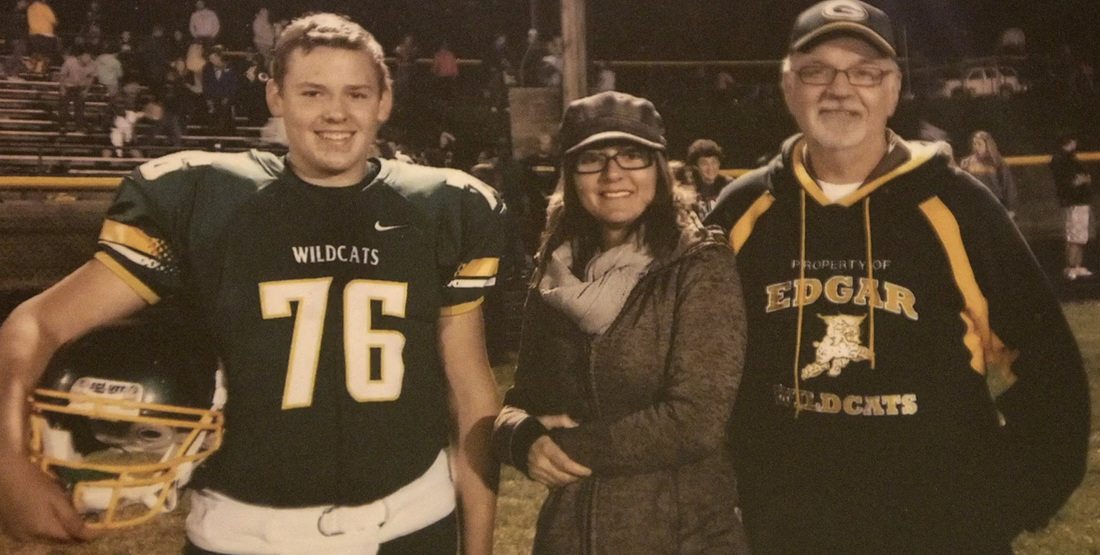
Jonathan Wesener and his parents, Angela and Steve

"Survivor Outlook" shares the voices of survivors of suicide loss whose experiences with grief and recovery have been reported in the news. To learn more about the survivors quoted, follow the links to the complete stories. Learn how you can suggest a story.


"I call his name, three times, by the steps, and I didn't heard anything, and that's when I went downstairs. The TV was off and -- that's how I found my son. He was gone. It is a horrible feeling when you hold your child's hand, and you can't do anything to save them." Angela Wesener, mother of Jonathan Wesener, 16, who died by suicide in May. (Appleton Post-Crescent, Wisconsin)

"We all have the most innate desire to survive. Thats our core need on the planet is to live, and when someone gets to the point that they take their own life ... that shows what hopelessness really feels like." Ganel-Lyn Condie, Lehi, Utah, sister of Meggan Killough, who died by suicide in 2014 at age 40 (Seth Adam Smith's "Keep Moving Forward" blog)

"At times it feels like forever. At times it feels like just yesterday." Shelley Davies, Alberta, Canada, whose son Keenan died by suicide in 2014 at age 22. (EMS World)
Read More
0 Comments

FOR SURVIVORS, THE VERY ACT OF TELLING THEIR STORY CAN BE HEALING

1/13/2016

0 Comments


I recently encountered a post from the blog of author Linda Sienkiewicz, titled "Derek's Black Hill Spruce," in which she recounts a struggle well known to survivors of suicide loss:

As a mother, no matter how many counselors, doctors and friends tell you suicide isn’t the parent’s fault, you can’t help but wonder what you did wrong.

In the aftermath of her son's death, in 2011, the family planted a Black Hill Spruce in his honor, but three years later, the once-thriving little tree "looked severely distressed, with brown needles and brittle branches, as if parched." And it is not difficult to imagine Linda's own distress over the tree's health:

I was shocked ... I watered it every day, but it continued to drop needles, and every day I felt more distraught. I had neglected Derek’s memorial tree. I had failed to take care of it properly and now it was dying. The metaphor was obvious. It seemed almost fitting that the tree would die under my care.

The story does not have a happen ending. The tree dies.

Why, then, is the story worth telling?

Because, as it turns out, the tree had a fatal disease. There was nothing that could be done to keep it alive. Again, the metaphor is obvious -- and telling the story of it was extremely valuable to Linda. She goes on to say that there really isn't a simple conclusion to draw ("there’s no way of knowing if we could have helped") but that, nonetheless ...

... it’s a sad truth that you can’t always prevent everything, and you can’t blame yourself.

I'm grateful for Linda's story because of how it helped her discover a very difficult part of her truth related to her son's death. She encourages us to believe that -- no matter how different our stories are, and no matter how various are the conclusions each of us draws about the suicide of our loved one -- there can be great healing in the very act of telling our stories.

0 Comments

SURVIVOR OUTLOOK: 'There is no nice neat explanation'

12/21/2015

0 Comments

 
Picture
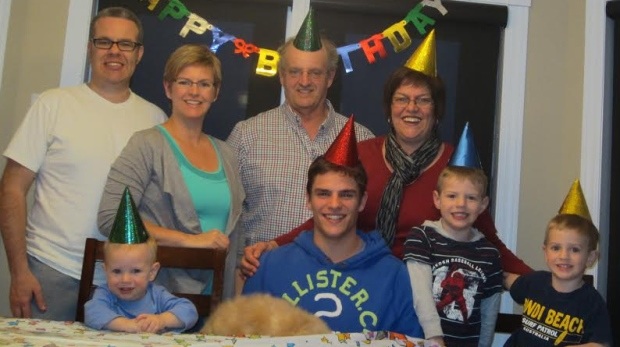
André Parker, center, in blue sweatshirt, died by suicide in 2012 at age 19.
"Survivor Outlook" shares the voices of survivors of suicide loss whose experiences with grief and recovery have been reported in the news. To learn more about the survivors quoted, follow the links to the complete stories. Learn how you can suggest a story.

"Murderers can at least be questioned, but a suicide is a murder in which the killer is also the victim: in which the reason, the motive, dies with the act." Jeremy Gavron, son of Hannah Gavron, who died by suicide in 1965 at age 29 (The Guardian, U.K. -- also see A Woman on the Edge of Time)

"Connor, Will [Trautwein], Robin Williams -- they died of an illness, just as people die of cancer and heart disease ... It is common. It is treatable. It is curable. And it is ok. The stigma needs to go away. People need to talk about it." Erin Ball, mother of Connor, who died by suicide in 2011 when was 14 (WMUR, Manchester, N.H.)

"Suicide grief is so complicated. It's a very physical pain. It affects every cell in your body." Grace Young, mother of Jack Young Jr., who died by suicide in 2007 at age 27. (Hartford Courant, Conn.)


Read More
0 Comments

ENIGMATIC NATURE OF SUICIDE MAY ANSWER THE QUESTION "WHY?" 

12/2/2015

0 Comments


A recently posted essay (you may download it here) argues that some aspects of suicide are inexplicable and suggests that if survivors of suicide loss who are struggling with the question "Why?" can embrace "the element of mystery as being as real as any other aspect of what [suicide] is all about," they might increase their "understanding and peace of mind by some measure."

Here are some of the observations that I claim "illustrate vital components of suicide that make this self-directed fatal act seem inexplicable":

  • Suicide requires the person who dies to overcome the innate human will to live, which is genetically designed to be a powerful and even invincible force.
  • Suicidal people, in almost every instance, are ambivalent about killing themselves -- so their behavior leading up to their death can be starkly contradictory because actions driven by the fact that they want to die occur side-by-side with actions motivated by the fact that they want to live.
  • Before the person died, internal factors existed -- and perhaps also some external circumstances -- that only he or she knew about.
  • In the end, the only person who is eligible to say firsthand why a particular suicide happened is the person who died by suicide in that instance.

The essay lists versions of these conundrums in the form of personalized questions that I hope lead people bereaved by suicide who are bedeviled by the "why" of it to a story of their own about what happened -- a story "based on who you knew the person to be (and who the person in essence still is, in relation to you)."

0 Comments

'COLUMBUS DISPATCH' SERIES DIGS DEEP ON SUICIDE AND ITS AFTERMATH

11/23/2015

0 Comments

 
Picture
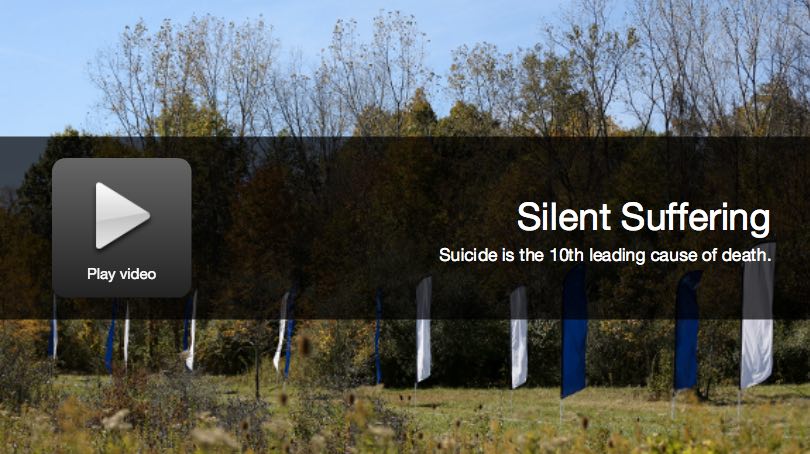
I hardly know where to begin in heartily recommending the "Silent Suffering" series published today by the Columbus Dispatch. Each of its half dozen in-depth feature stories and handful of engaging videos is in itself worth experiencing. Taken all together, the series offers an extraordinary opportunity to see suicide from the perspectives of those who struggle with thoughts of killing themselves, of caregivers who are devoted to preventing suicide, of family members who are left behind to ask "Why?" and truly of everyone in a community who is affected by suicide.

Click on the picture above to go to a video that sets the scene for the entire series (the video features several moving stories from people's personal experience). My introduction to the series came when a colleague sent me the article "Some Survivors Cope with Loss by Helping Others Affected by Suicide," which tells the stories of people bereaved by suicide who now volunteer in a variety of ways that change -- and literally save -- the lives of others struggling with suicide and its aftermath.

I hope the following quote from the "Helping Others" story persuades folks to explore whatever might interest them in this superb series. These are the words of Mary Ann Ward of Columbus, Ohio, who lost her son Murray to suicide in 2009 -- and who now facilitates a support group for people bereaved by suicide.
“All we can do is accept this loss without ever understanding it, and lean on one another to move forward ... I can give hope to those who are newer than I. From the pain, we can grow in knowledge and wisdom, and experience joy again.”
0 Comments

SURVIVOR OUTLOOK: "You don't ever want people to forget"

7/5/2015

0 Comments

 
"Survivor Outlook" shares the voices of survivors of suicide loss whose experiences with grief and recovery have been reported in the news. To learn more about the survivors quoted, follow the links to the complete stories. Learn how you can suggest a story.

"I just wanted a way to remember him. As a mom, that's something you don't ever want people to forget, to forget who he was" (Lori Christianson, Fruit Heights, Utah -- whose 24-year-old son died by suicide in January -- referring to the "Brake the Cycle" event that is dedicated to him).

"It's helping me let Christopher's legacy live on, and it could possibly help save another teenager's life or another parent the grief ... That's what keeps me going every day" (Janet Sutton, Killeen, Texas -- whose 14-year-old son died by suicide in April 2014 -- commenting on the new peer support group she helped start).


Read More
0 Comments

FJC'S JOURNAL: Here's How Paying Attention Sometimes Works for Me

5/6/2014

2 Comments

 
Picture
How do we piece together the next thing and the next thing after that? The only answer that makes sense to me is, one thing leads to another -- and becomes purposeful if we pay attention.

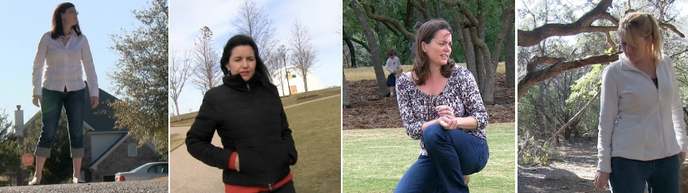
Yesterday, I encountered an announcement for the Seattle premiere of a documentary, Four Sisters. The four sisters featured in the film are all survivors of the suicide of their brothers. The sisters are pictured above in photographs by filmmaker Caley Cook, from left, Lauren Greenberg, Maria Rivera, Laurie Cook-Heffron, and Laura Habedank. (Each sister introduces herself in a clip from the film, available on the Four Sisters home page.)

I highly recommend the film, for it is a beautiful example of how one survivor's loss (Caley Cook's brother died of suicide) reverberates outward and helps other survivors grapple with the broken pieces of meaning we are all trying to fit together. But this blog post is not about the film: It is about going where you're led -- and paying attention.

In the announcement for the film premiere, Forefront Cares is listed as the host of the event. Forefront Cares is the bereavement support program of Forefront, a statewide initiative at the University of Washington whose "goal is to lead other states in innovative approaches to suicide prevention." Forefront is, in part, the brainchild of a colleague and friend of mine, Sue Eastgard.

One thing leads to another.


Read More
2 Comments

SURVIVOR OUTLOOK: "They don't see the pain they'll be inflicting"

5/1/2014

1 Comment

 
"Survivor Outlook" shares the words of survivors of suicide loss whose experiences with grief and recovery have been reported in the news. To learn more about the survivors quoted, follow the links to the complete stories. Also, learn how to suggest a story.

"I have to believe the state of depression ... is so dark and gloomy and like a tunnel vision that they really don't think or see beyond that. They don't see the pain they'll be inflicting." Janine Harris, Sioux Falls, SD, lost her 20-year-old daughter, Nicole, to suicide in 2005.

"That's the terrible thing about suicide, is there's no closure." Marie Osmond, Provo, UT, lost her 18-year-old son, Michael, to suicide in 2010.

"All I remember of her is in a soft blue dress, sealed away in a stiff coffin. Her absence has marked my life ever since -- from the comforting of my cousin in the missingness of her mother to the haunting images of her death." Leslie Lamb, who blogs at lesliealamb.com, lost her aunt (who was pregnant when she died) to suicide when Leslie was four years old.

"There was nothing I wouldn't have done or given to see you happy and at peace ... Your presence is very, very missed. Every day something happens where you should be there, and you're not." Cherrie Cran, at a support group meeting in Brisbane, Australia, speaking as if to her son Bede, who died by suicide at age 19.

"You're left with so many questions, the whys and the hows, and why didn't he call me?" Danna McGill, Washington state, lost her best friend to suicide in 2008.


Read More
1 Comment

DEATH MIDWIFE PROBES REGRET, SADNESS IN REFLECTION ON BROTHER'S SUICIDE

3/27/2014

0 Comments

 
When I saw the title "A Death Midwife's Perspective on Suicide" I did not suspect the post was by someone whose brother had died by suicide only a month before she wrote it, but so it was:
My brother, my best friend in life ... lost his battle with bipolar on February 25th ... My brother was also my hero, and we loved to rib each other. I miss him so much every day.
I was reminded, as I read, how much we who have lost a loved one to suicide have in common, regardless of who we are (or who we think we are); and I am grateful to the author, Rowan MistWalker --
a professional tarot and oracle diviner ... [who] from time to time, when Spirit wishes ... serve[s] as a medium, helping others connect with their departed loved ones
-- for reminding me of that.

Her post is a painfully candid review of her interactions with her brother during the final weeks of his life, in which she explains her regrets as eloquently as I've ever heard a survivor of suicide loss explain them:
I wish I had the compassion, the strength, the courage to confront him as he was, day by day, losing the will to live.
That comes from the kind of soul-searching not circumscribed by a person's religious preference, and the remorse and sadness in it breaks my heart. Other people may have the cosmos arranged a bit differently than I do, but if you prick them, do they not bleed? Suicide has shown me the truth of that again and again, both in how it claims its victims with indifference toward "who they are" and in how its aftermath serves as a great and awful equalizer among the bereaved.

Her post includes a picture of Ms. MistWalker's brother, and he looks like a person who would "rib" his sister (and take a good ribbing from her). No doubt he will be missed every day ...
0 Comments

FJC'S JOURNAL: Having No Choice Is Downside of Starting Over, and its Upside

3/21/2014

0 Comments

 
"FJC's Journal" is an occasional feature on the Grief after Suicide blog, in which Franklin Cook shares observations about suicide bereavement from his personal experience as a survivor of suicide loss.

"The Wake of Suicide: A Synopsis" is a very brief version of my whole story as a survivor. I wrote it for a friend and colleague who is including it in a book he's working on (I'll post about that when it's published later this year). Here are a few excerpts from the story:
[My father] did not ever -- during the entire course of his life -- receive the help he needed for the problems that killed him, and that's a pity (it is also the answer to "Why?" that points not only to him as an individual but also to his community and our society).

The explanation I would give for being where I am today is that I traversed enough ground to get here, step by step: I grieved by trial-and-error, and my healing turned out to be a holistic experience that I couldn't have caused using a linear strategy.

I do not think in terms of what should or shouldn't have been. My father is dead, he died horrifically, and his death nearly shattered his loved ones in its wake -- and I cannot change that.
I'm posting the story here today in part because, after a bit of a hiatus, I want to return to writing"FJC's Journal" for Grief after Suicide -- and this is a way for me to start over on that. There's a lot to be said for starting over, isn't there? Not only because we have to but because (if we're fortunate and if we're paying attention) we get to, over and over again.
0 Comments
<<Previous
    FREE NEWSLETTER
    BLOG HOME PAGE
    • "After a Suicide" Resources 
    • Directory of Survivor Support Groups


    Categories

    All
    Advocacy & Policy
    Announcements
    Black Community
    Children's Grief
    Community Support
    Death Of A Child
    Death Of A Friend
    Death Of A Parent
    Death Of A Sibling
    Death Of A Spouse
    Depression & Grief
    Experts On Grief
    First Responders
    FJC's Journal
    Grief And Communities
    Health & Grief
    Helping Others
    Holidays
    Men's Grief
    Military
    National Guidelines
    Peer Support
    Programs And Services
    Research
    Spirituality & Grief
    Suicide Prevention
    Support Groups
    Survivor Outlook
    Survivor Resources
    Survivor Showcase
    Survivor Stories
    Taking Action
    Trauma

    Grief after Suicide posts are by Franklin Cook (unless noted). Learn more about Franklin's work in suicide grief support.
    Blogs on Suicide Grief
    • Alliance of Hope
    • Healing Suicide Grief
    • Lala's Mom
    • Our Side of Suicide
    • Mary's Shortcut
    • Loss of a Child
    • Bright Shining Star
    • Speaking of Suicide
    • Everything But the Cat

    RSS Feed

    TERMS OF USE AND SERVICE
    Must be read by anyone posting any content on this website.

    © 2016 Personal Grief Coaching.
    All Rights Reserved.